U.S. golf facilities are the healthiest they've been in decades, and NGF's longitudinal research shows why. See what's driving the turnaround.
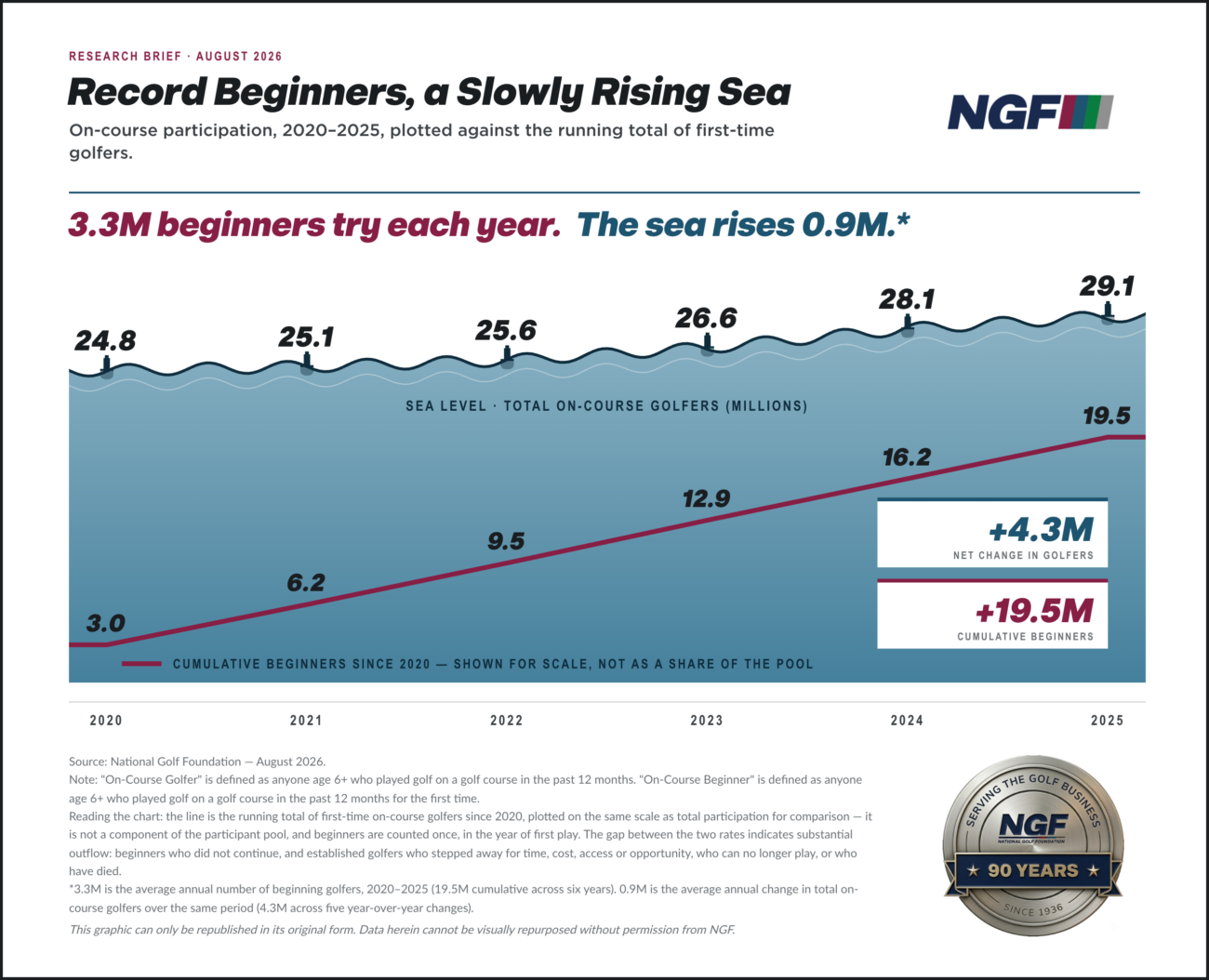
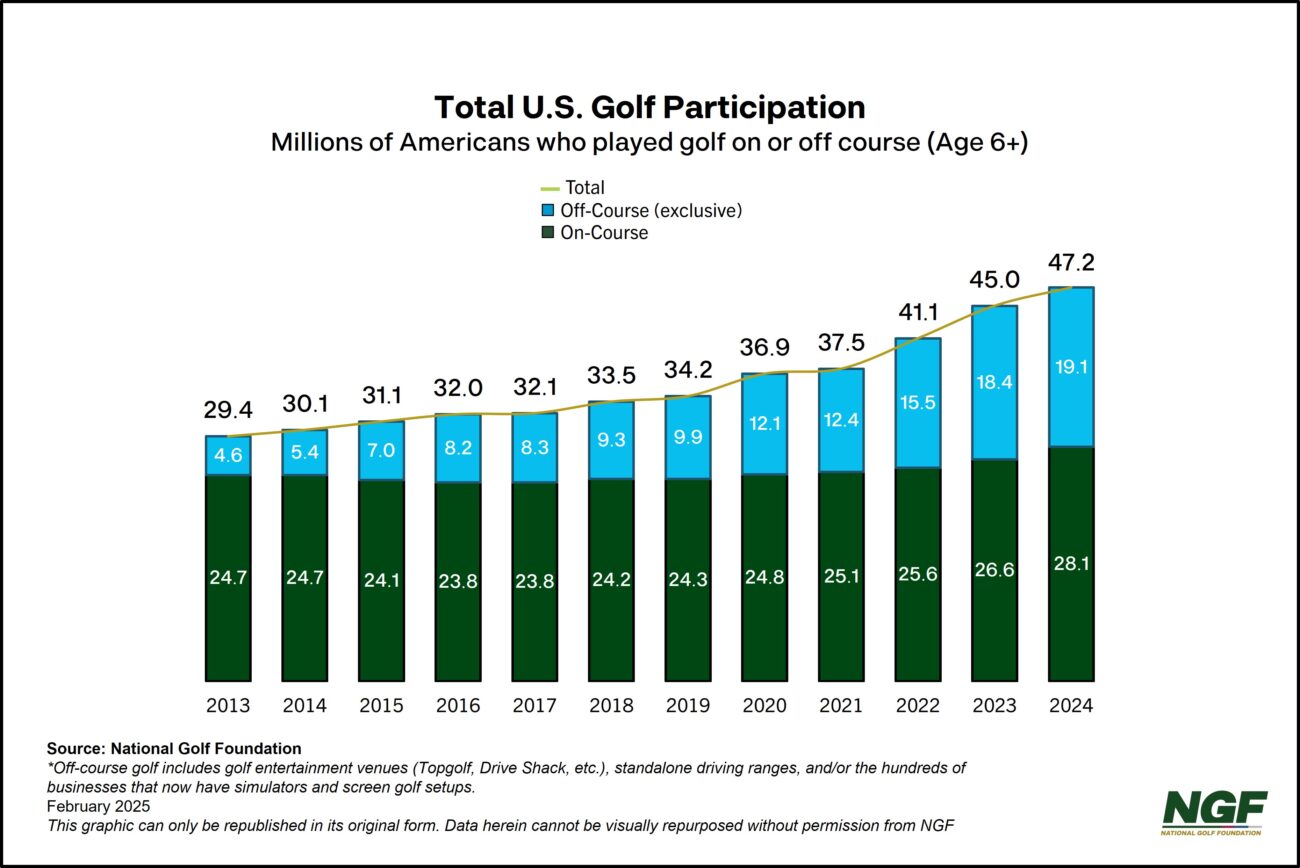
Every year from 2020 through 2025, more than three million Americans tried the on-course game for the first time — six consecutive years topping a mark the industry had never reached before the pandemic. Yet only about one in four beginners becomes a committed golfer, meaning millions who try the game still walk away without becoming real customers.
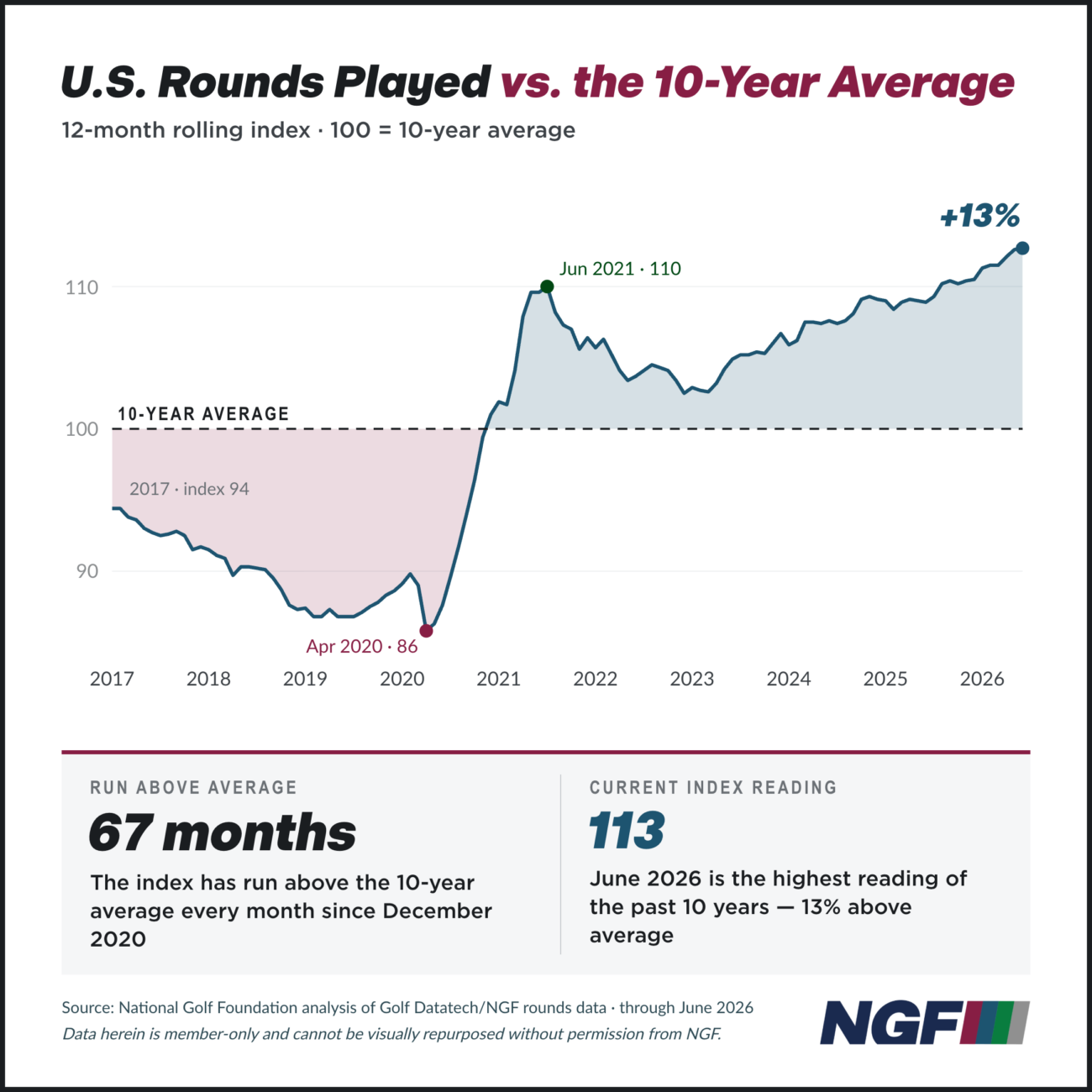
Midway through 2026, and in the heart of golf's peak season, play at U.S. courses is on pace to set another record for rounds -- provided any unforeseen disruptions during the second half of the year.
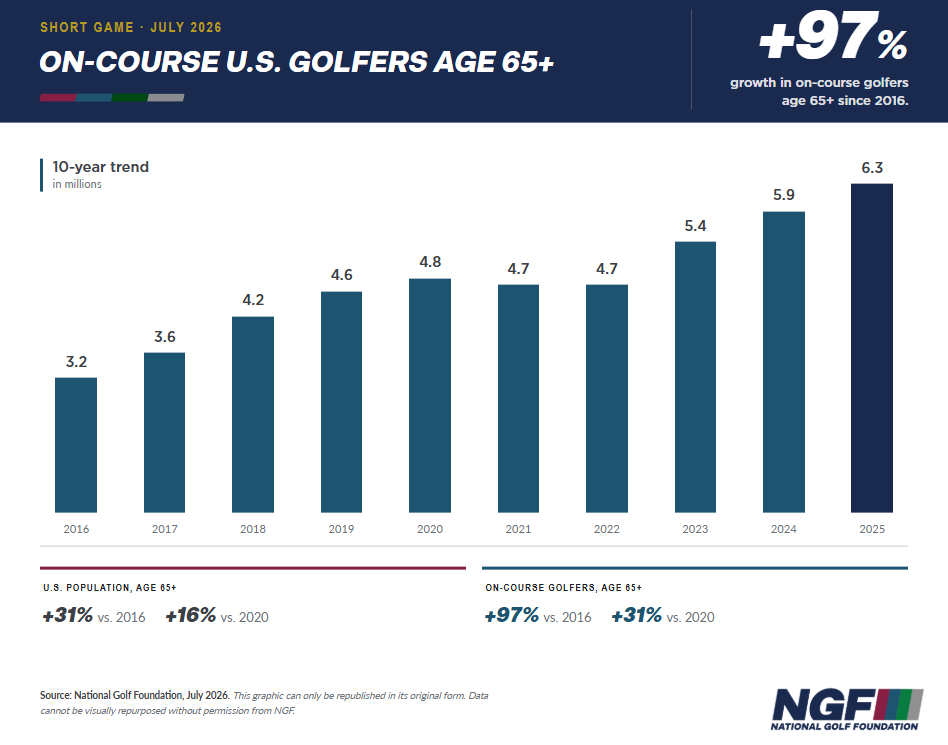
While there’s been a lot of understandable excitement around NGF’s reporting on golf’s youth movement, the other end of the age spectrum is seeing considerable participation momentum as well – a trend that is a byproduct of broader U.S. demographics.
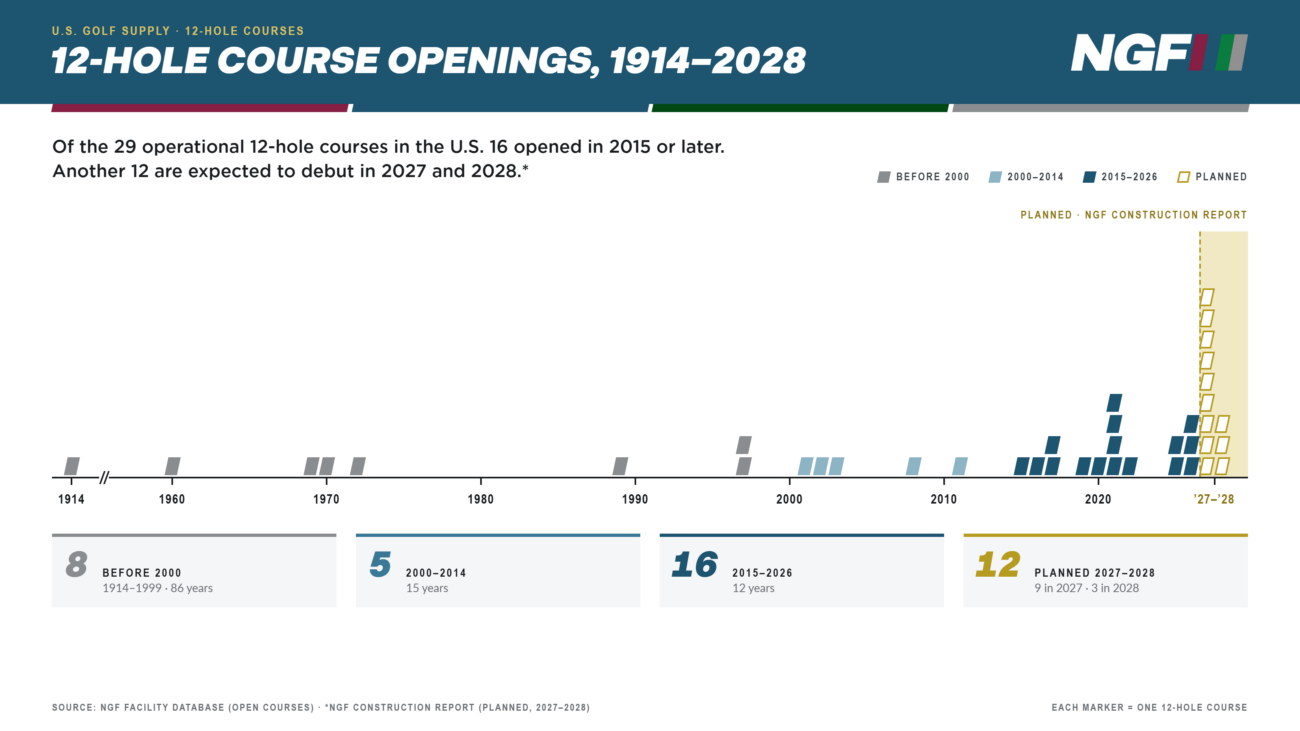
A growing number of owners, developers and architects are building 12-hole golf courses to offer shorter rounds and easier entry to the game. While there are only about 30 in the U.S. today, more than half opened in the past decade. Projects like The Commons at Sand Valley in Wisconsin, Old Shores in Florida, and Sweet Tooth at South Carolina's Candyroot Lodge, suggest the format's niche appeal is growing.
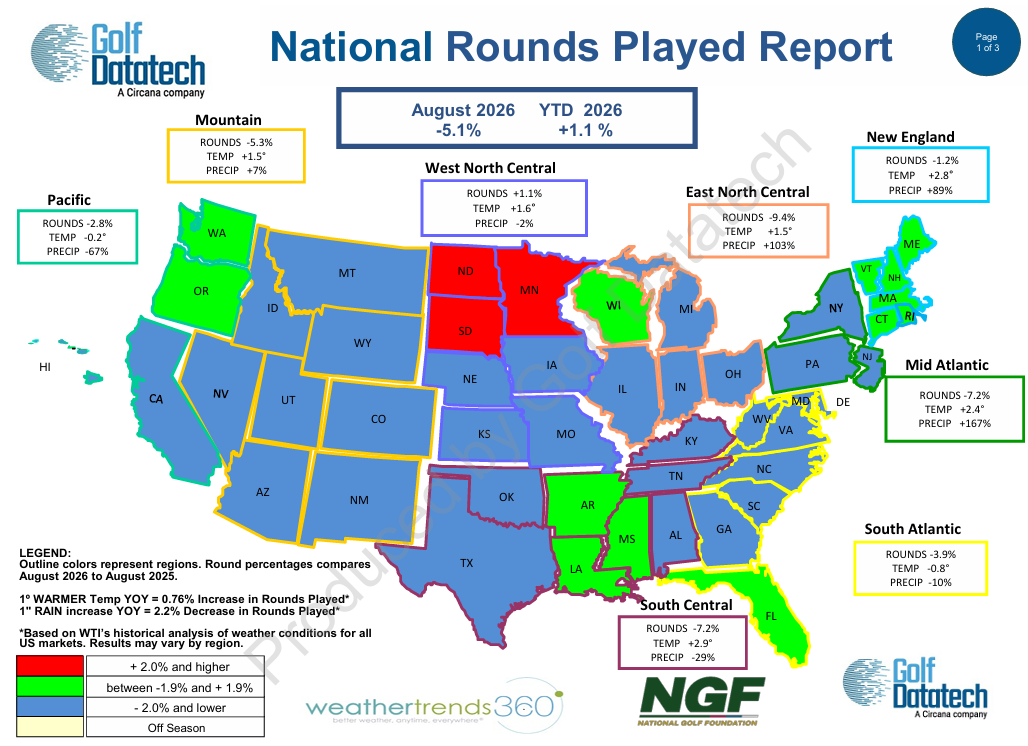
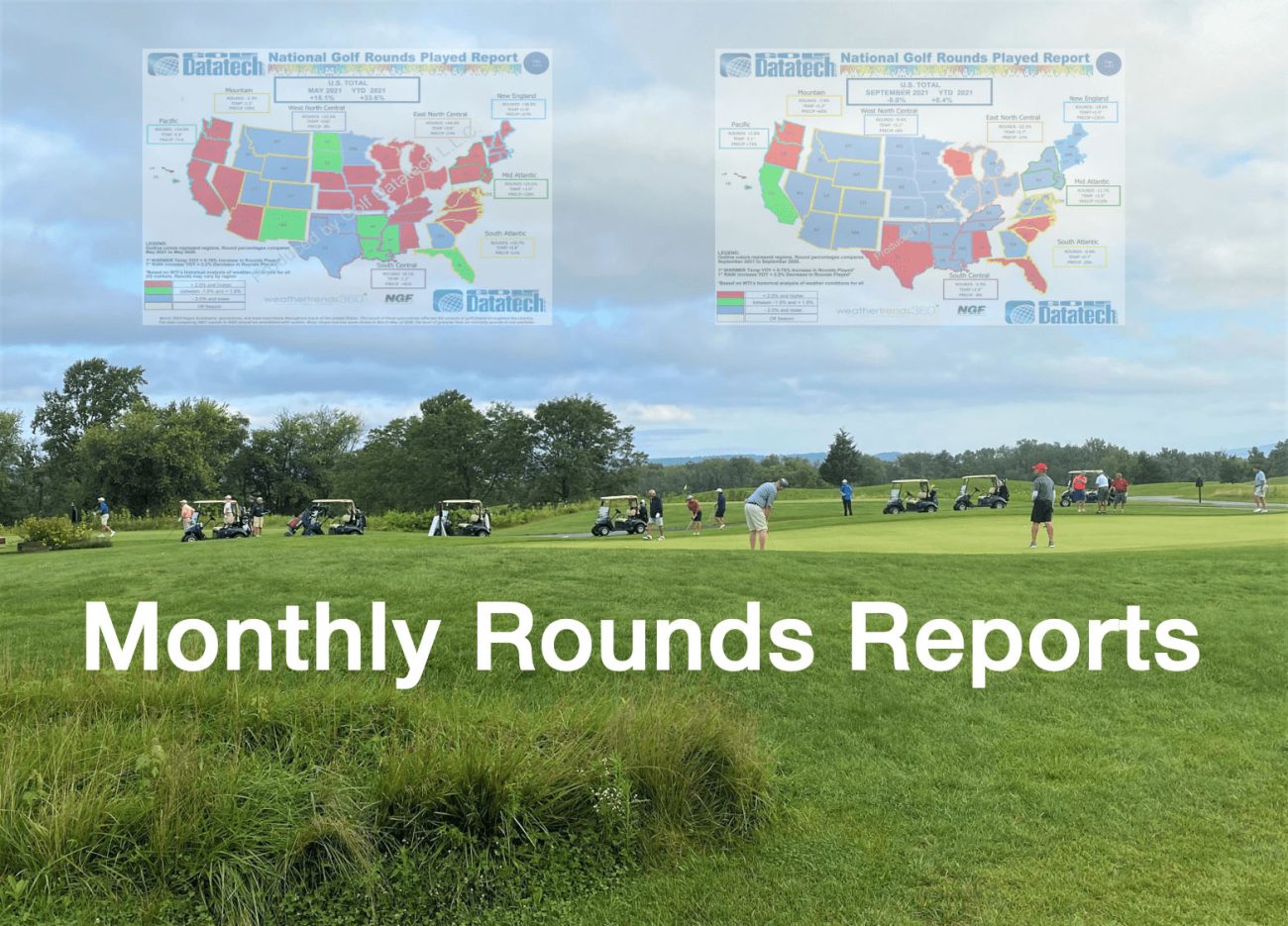
Elevated precipitation in golf-rich regions in the Northeast and Midwest helped contribute to a notable year-over-year decline in August play.
There are about 2,000 fewer golf facilities in the U.S. than 20 years ago, yet hundreds more are run by third-party management companies today. Here's what's behind the steady growth of multi-course operators and why more owners are turning to professional management.
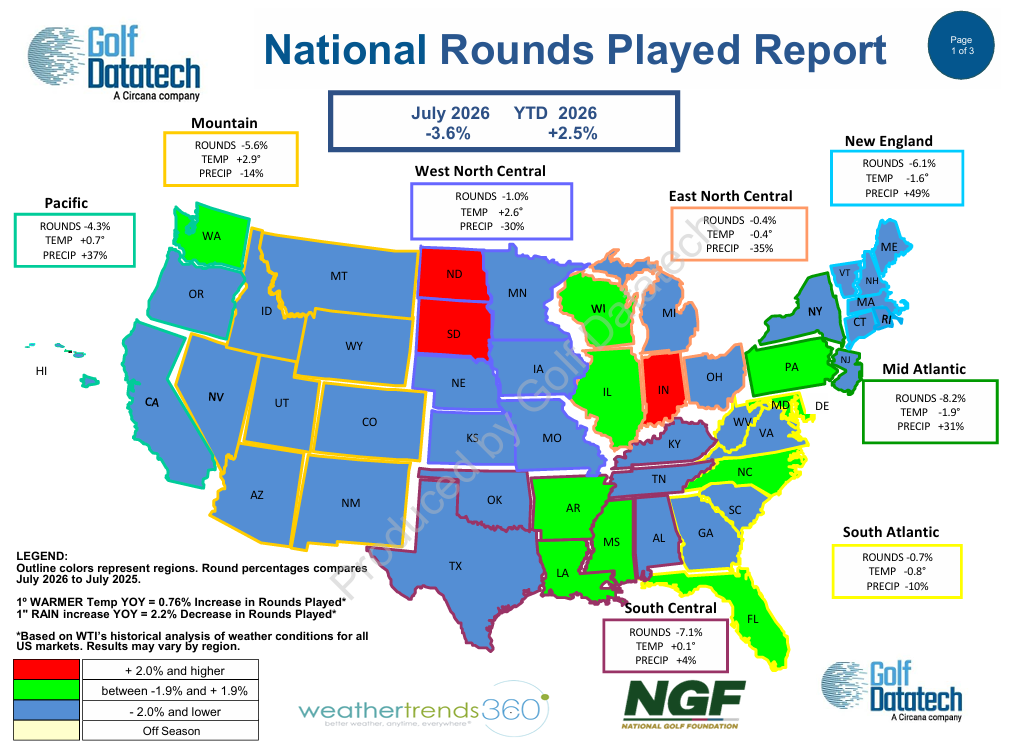
Rounds were down in July -- historically the highest-volume month of the year for play -- with some of the biggest year-over-year declines in golf-rich states.

More than 3 million people have taken up golf every year for six years running — a record high. This member piece breaks down what's driving the surge, from the pandemic to off-course golf, and why keeping beginners in the game may matter more than attracting them.
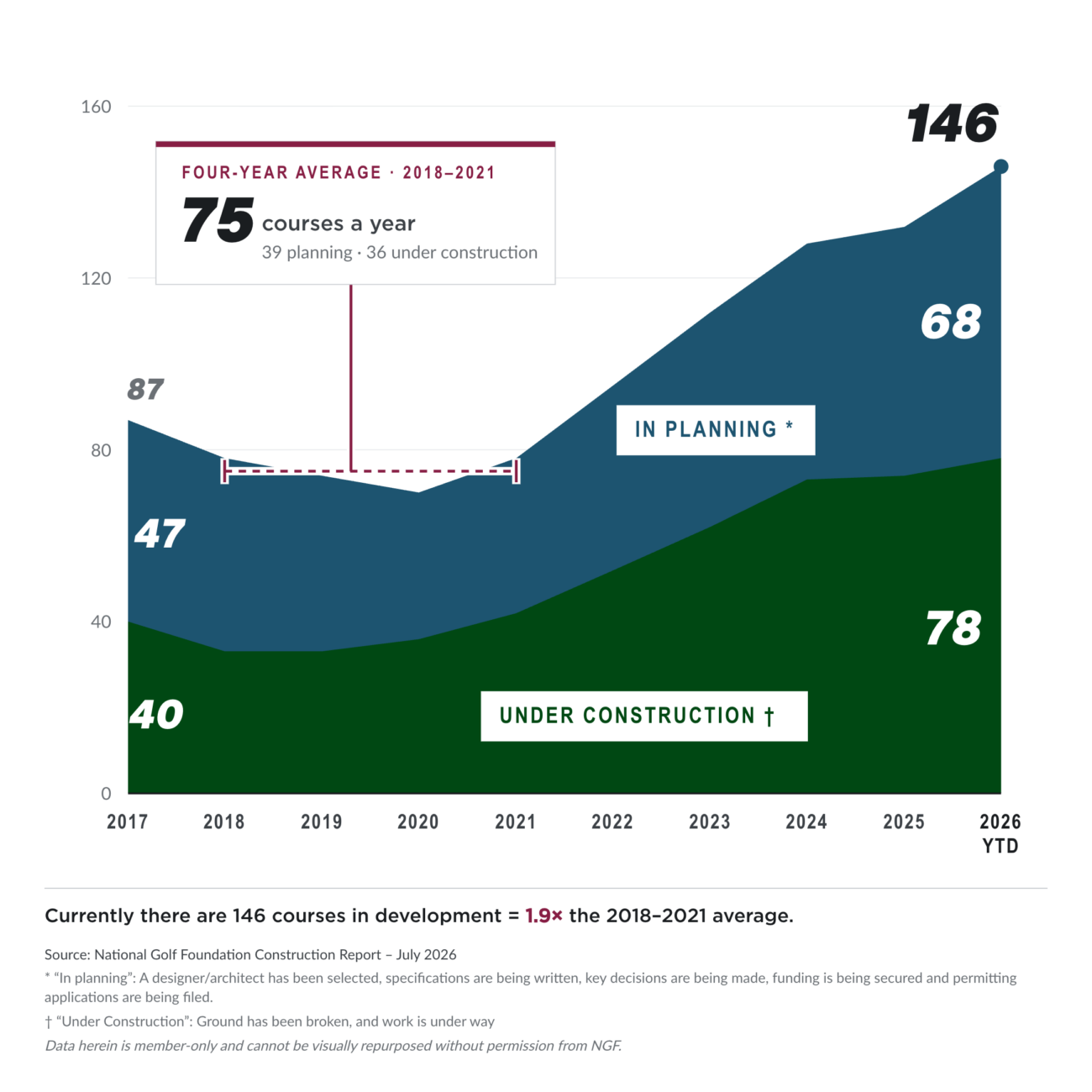
New U.S. golf course development is at its highest level in more than a decade, with active projects in 32 states — including three which together account for 40% of new course activity.
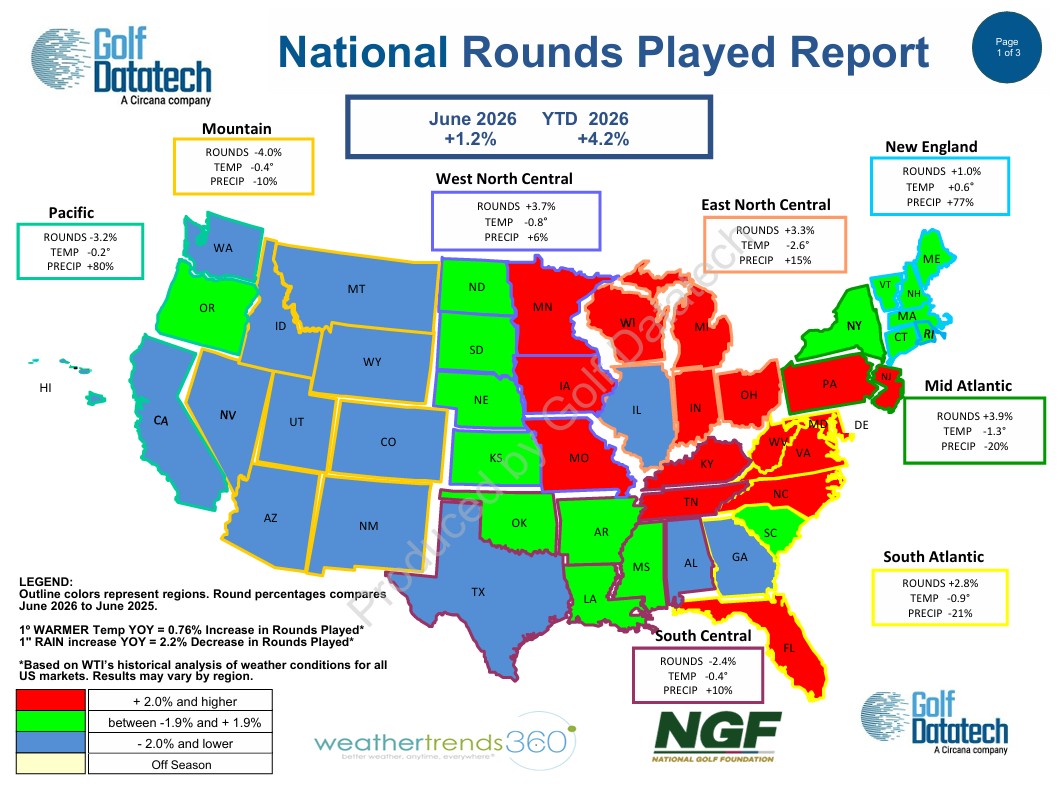
June is one of the highest-volume months of the year for U.S. play and rounds were slightly ahead of the 2025 pace on a national level.
Follow NGF on Instagram and Facebook!

‘Okay Boomer’: Golf Is Growing at Both Ends of the Age Spectrum
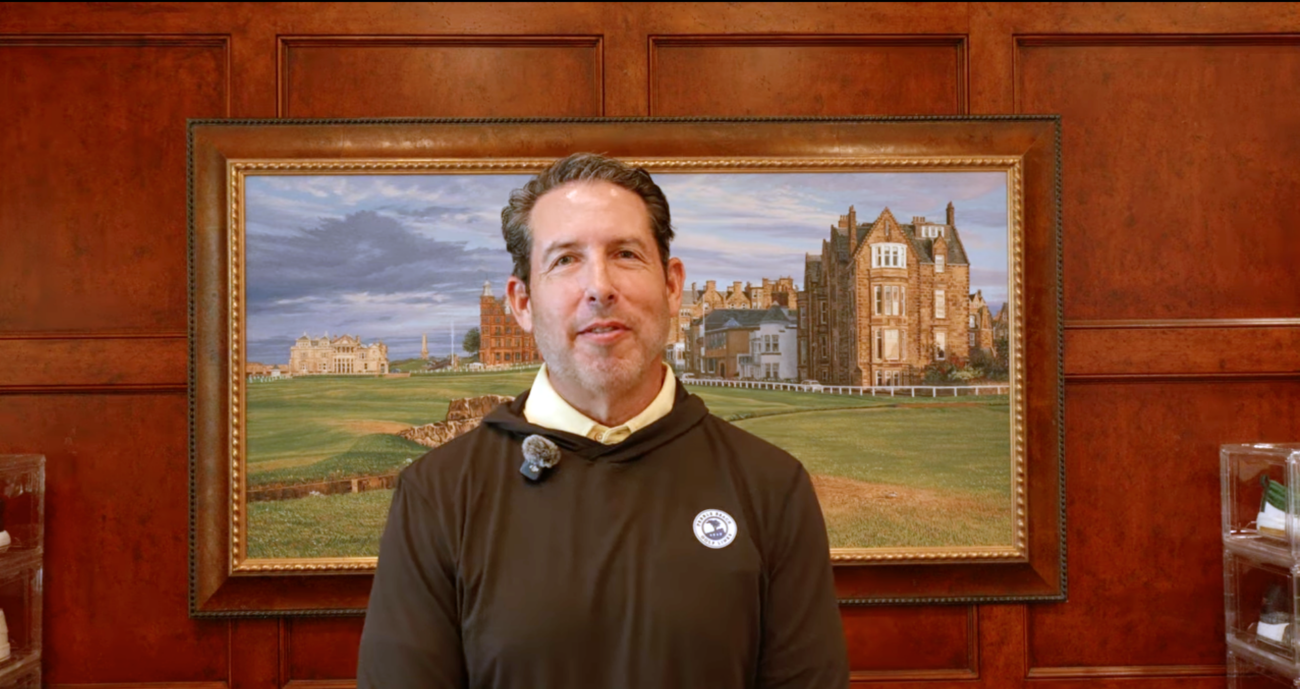
Greg Nathan at Shinnecock: More People Playing Golf in More Ways Than Ever in American History

Greg Nathan Joins NGCOA's Golf Business Live to Talk Supply, Demand, and Golf's Vulnerable Underbelly

NGF Consulting Celebrates Re-Opening of South Florida Muni

Featured Pub

Greg Nathan Shares The State of the Golf Economy with Golf Channel’s Golf Today

Golfer Facts
Course Facts
Not a Member? See What You're Missing!

Directories

Rounds Played
Sponsored Ads

Subscribe to receive 3-minute insights... free!
Why Join the NGF?
The NGF has the leading research and business services team in golf, providing you and the industry with the most accurate and latest golf business data and trends.
With proven success in market analysis, sales analytics, direct marketing, and consulting services available, the NGF offers a variety of services than can help you.
The NGF is supported by individuals and companies from every corner of the golf industry, making possible our research, and grow the game and educational initiatives, like Welcome2Golf.
Need Help?
Answers to the most frequently asked questions about the NGF and the benefits of membership.

Monika “Moe” Baldwin
(561) 354-1617

Madison Myers
(561) 354-1632
Special Anniversaries
New & Renewing Members